Archive

Alex

As the London tube system will only get more complicated, maybe it is time to consider using an idea from the Paris Metro: make more of names of the terminii of each line. I think that one of the biggest problems for new users of the system is the use of compass-point directions (‘Eastbound and Westbound’) at tube stations.

Sometimes I need to change at Westminster. When I do, I see that the Jubilee platforms are labelled as being for trains going ‘Westbound’ and ‘Eastbound’. Surely from the point of view of most Londoners, certainly for those who navigate by the tube map, the Jubilee line goes north-south at that point, and the sub-surface lines east-west. The District and Circle aren’t marked as going Northbound and Southbound at Westminster (which are the directions it travels at that station).

Both the Jubilee and Bakerloo lines leave Baker Street to the east. Their platforms aren’t described as Eastbound.

Signage could look like this:

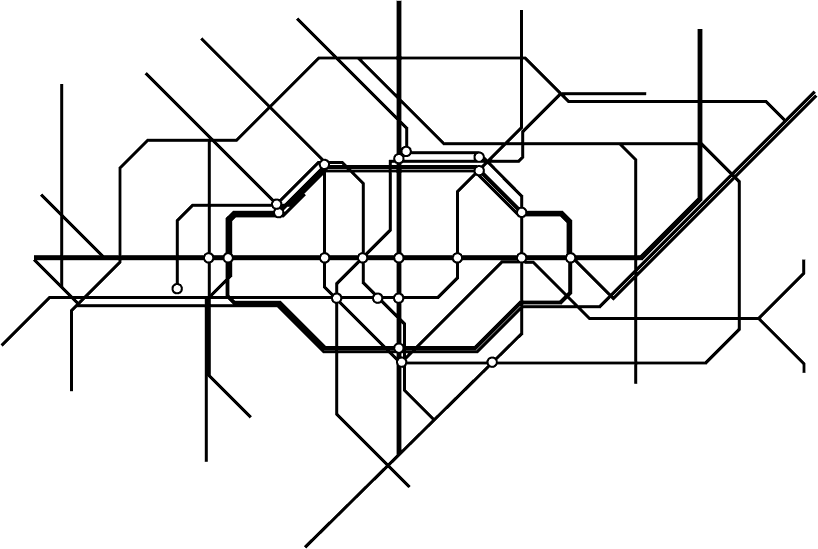
With a revised (2012) tube map looking like this:

The 2012 tube map with the teminii emphasised
Click to enlarge.

On the subject of what multi-touch interfaces will be manipulating in the future…

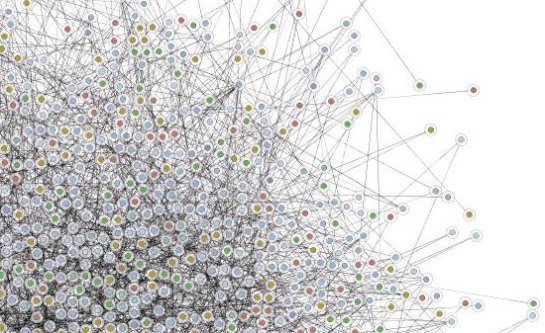
A network of people, documents or ideas

I have recently been working with a company that combines databases together to build ‘social networks’ – to model the way groups of people in society interact. This would be useful within organisations and projects too. If the connections within a project can be generated automatically, they’d be more useful…

I guess there’ll be some sort of three dimensional concept browser that will represent an individual’s model of their understanding and interaction with a project. Each member of the project would see a different view of the project. This is the sort of thing that will gain from direct (multi-touch-supported) manipulation.

Why ask the people? Why do news shows ask people what their opinion is on major (or minor) news stories? To make stories ‘personal’ I suppose. To make their shows ‘interactive’ and ‘responsive’. To fill time? Probably. Wouldn’t it be better to find people who can shed some light on some aspect of the story?

That would be better than going to a live linkup to a pointless shot of a journalist outside a building waiting for something to happen. Especially as with all the live links, the journalist has no time to find things out on location: they are fed the news by the people back in the studio.

Pundits love the idea of the democratising the media: give people access to the tools and a method of distribution – that’ll scare ‘them’. ‘They’ are media barons and governments. ‘They’ are big movie companies and TV networks. Watch ‘them’ quake as the old models are swept away by citizen journalism and the creativity of ‘the people’.

The problem with this theory is that access to tools and to distribution doesn’t change the proportion of those in society who produce and those who consume. The slow evolution of technology simply changes who does the producing – it doesn’t make more people want to do it. This redistribution of staff will change much in the media business, but it doesn’t mean the definition of what a citizen is will change.

Eventually, all the activist media democrat will need to go with their digital technology and almost free distribution system will be the four or five years it takes to teach themselves how to tell stories effectively using visual media. That narrows the option down to the usual 2% of the population who care about this sort of thing…

After having a look at the new user interface for Microsoft Office, I was wondering how I would update the icon on the ‘Save’ button.

Word 2008 - top left corner of document window

Apple launched their first Mac that didn’t have a floppy disc drive nine years ago. I wonder if the people who have come to use computers since then recognise what this ‘Save’ icon represents.

Even if you do recognise it, why does a picture of a floppy disc represent the ‘Save’ action? This picture should mean ‘Show me what is on my floppy disc.’ ‘Save’ is short for ‘Commit the current version of the document to a place where I can recover it from should I need to.’

We need a new representation of the places that we keep our information. In a few years time we won’t care about the physical location – those details will be someone else’s job to look after. I suppose an illustration of memory or time would do for that. We need a good writer to come up with a concept that can be illustrated with a few pixels on a toolbar button.

When friends of mine profess frustration with the technology in their lives, I remind them who to blame.

Picture the scene: It’s 1982 and some kids are asking their friend to come out and play. This 10-year-old has a choice to make. He can either solve the problem he has on his VIC-20 home computer, or go out and play in the sun.

The choice is between fixing software or being with humans.

The problem of how to program a computer can be solved. If you are smart enough, you can make the computer do what you want. If there is an error, you can find it. Eventually. Computer output can be predicted based on all the inputs. That’s the problem with humans. Their ‘output’ can’t be predicted. Even if you give them the same input, they’re always acting in inconsistent ways. There is not accepted way of understanding human actions and reactions. They can be difficult to deal with.

This decision wasn’t very difficult for many of those who went on to create the hardware and software we use today. It was simpler, more elegant, more satisfying to stay in their bedrooms learning Commodore machine code, CP/M, the Phoenix BIOS, dBase.

The irony is that the very people who find designing hardware and software so appealing are the ones that find it the hardest to identify with those who use the products of their labours.

So, when you next get a ridiculous error message, or your work vanishes for no reason, remember that you’ve done enough work in understanding how all this stuff works. It’s time for all this expensive technology to meet us at least half way. At least don’t feel you should know what went wrong. Understand that the creators of this technology barely understand the daily lives of the people who battle to use their products every day.

That won’t bring your work back, but at least you shouldn’t feel that you’ve done something wrong. Grit your teeth, hold on for another few years, and wait for the time when computers and software are good enough for you to use.

…they use such weird language – they don’t know how to communicate like what we do. Have you seen the kind of spelling they use when texting each other? How can they be literate if they don’t spend time reading books. They are on the internet for hours on end. How will they learn how to put the right words together so that can make themselves understood?

Their constant instant messaging is the solution! Looking back at when I grew up, we spent a good amount of time on the phone. Parents limited that time because even local calls were expensive back then. Friends hung out together.

Last year I made a film that featured thirty people aged 11 to 16. I asked them about their technology habits. How they used instant messaging, bluetooth, texting and mobile phone calls. They confirmed that most people come home from school, log into some instant messaging software, do their homework and keep their social networking pages up to date. Bebo was the most popular this time last year.

I think that this technology may produce citizens who will learn to be more articulate when writing. They have had many years more experience than adults in learning how to represent their state of mind through typing simple messages on their mobile phones, IM clients and home pages. They have learned efficiency – who has time? They have learned accuracy – they don’t want to spend precious time with clarifications. These are some of the principles that are lacking from most adult communication.

It could be that when these people start communicating in business, they may avoid the pitfalls of presentation software. They may go back to the ways of efficient memos or carefully written reports. It is these that can be improved with the addition of other media. When there is a reasoned argument, pictures, audio, animation and video can be there to support the idea being communicated instead of vice versa.

Here’s hoping.

As David and I walked through the Louvre’s courtyard, we discovered a display sponsored by the Museum of Flight at Le Bourget. Two real helicopters were parked there: one from 90 years ago and a modern helicopter operated by the French Marines.

That reminded me that in films and TV shows that feature helicopters, we never see the landing gear retract or deploy. Up to very recently, nearly all sequences of aeroplanes taking off featured footage of the undercarriage retracting. Sometimes we see the wheels deploying before a landing. It shows that the plane has taken off and has now committed to flying off. It won’t land any time soon. For some reason I’m always looking at helicopter skis and wheels in movies. One moment they are deployed. In the next, we see a smooth bottomed vehicle flying through the air. Unless our hero needs to hang from or go out on the skis to shoot the baddies.

The fact that this is never shown, means that we don’t need to see it. I suppose it’s that we know that helicopters take off and land wherever they want. Wheels and skis can be redeployed as needed. It follows that we are likely to favour shots as punctuation in the stories that we tell that seem to show a simple piece of information (‘the wheels are up’) that conveys a more advanced idea (‘they are committed to their journey – there’s no going back’). In this case, helicopters use a different language.